For the first time in our history, offices are home to five different age groups working together. This mix includes veterans who have been in the field for decades and young adults just starting their first jobs.
While some people see this as a problem, the best leaders see it as a huge benefit. This diversity brings a wide range of skills, from deep industry knowledge to the latest tech skills. To lead well today, you must understand what makes each group move and how they like to talk.
This guide will show you how to lead Baby Boomers, Millennials, and Gen Z effectively.
Table of Contents:
The Context of Today’s Mixed Workplace
Today’s workplace is a living thing that changes as people join and leave. Right now, Millennials are the largest group in the workforce. Gen Z is growing fast and will soon make up a large part of the labor pool. Meanwhile, Baby Boomers are moving toward retirement, but many are staying longer than expected.
Each group was shaped by the events of their time. Boomers saw post-war growth. Millennials grew up as the internet became common. Gen Z has never known a world without smartphones. These experiences change how they view work, loyalty, and balance. As a leader, your job is not to force everyone to act the same. Instead, you should find the middle ground where everyone feels heard and valued.
Leading Baby Boomers: Respect, Loyalty, Verbal Communication
Baby Boomers (born 1946–1964) have been the backbone of the workforce for a long time. They are often very loyal to their companies and have a strong work ethic.
Baby Boomers often view work as a core part of their identity and value structure, loyalty, and earned respect.

1. Show Genuine Respect for Their Journey
The most important thing to remember when leading Boomers is to respect their experience. They built the companies we work in today and created many of the rules we use. They often feel ignored when companies focus only on younger staff. Never talk down to them or treat them like they are out of date. Instead, ask for their view on big decisions. This shows you value what they have learned over the years.
2. Use Direct, Personal Communication
While Boomers use tech, many still prefer talking in person or on the phone. They value the relationships they build at work and like face-to-face time. When you have a big update, don’t just send a short text. Take the time to meet with them and explain the "why" behind the change.
For communication or giving a feedback, this generation generally prefers face-to-face meetings, phone calls, or in-person discussions over digital messaging. They often find personal touches more respectful and efficient for in-depth conversations.
3. Leverage Them as Mentors
Boomers have a wealth of knowledge that the company needs. Giving them a chance to teach younger workers gives them a sense of purpose. It also ensures that their skills stay in the company after they retire. They often enjoy being seen as the resident experts.
4. Provide Structure and Recognition
This group often likes clear and realistic goals and formal roles. They grew up in a world of hierarchies and respect for authority. Public praise and formal awards can be very motivating for them. They appreciate knowing exactly what is expected and when it is due.
5. Be Direct and Results-Oriented
When sharing updates, offer context-rich information and clear goals rather than brief, abstract messages. You do not need to "sugarcoat" feedback for Boomers. They often prefer a straightforward, professional approach that focuses on what needs to be fixed and the specific results expected.
6. Use Formal Recognition
Boomers appreciate formal acknowledgments, such as written appreciation, awards, or public praise for their long-term contributions. They respond well to formal accolades, such as public awards, certificates, or written letters of appreciation for their years of service and hard work.
Leading Millennials: Growth, Encouragement, Flexibility
Millennials (born 1981–1996) are the largest group in the office today. They are tech-savvy but also value human connection. They are often seen as the group that started the push for meaningful work.
Millennials value collaboration, purpose, and continuous growth, seek purpose and see feedback as a vital tool for their personal and career development.
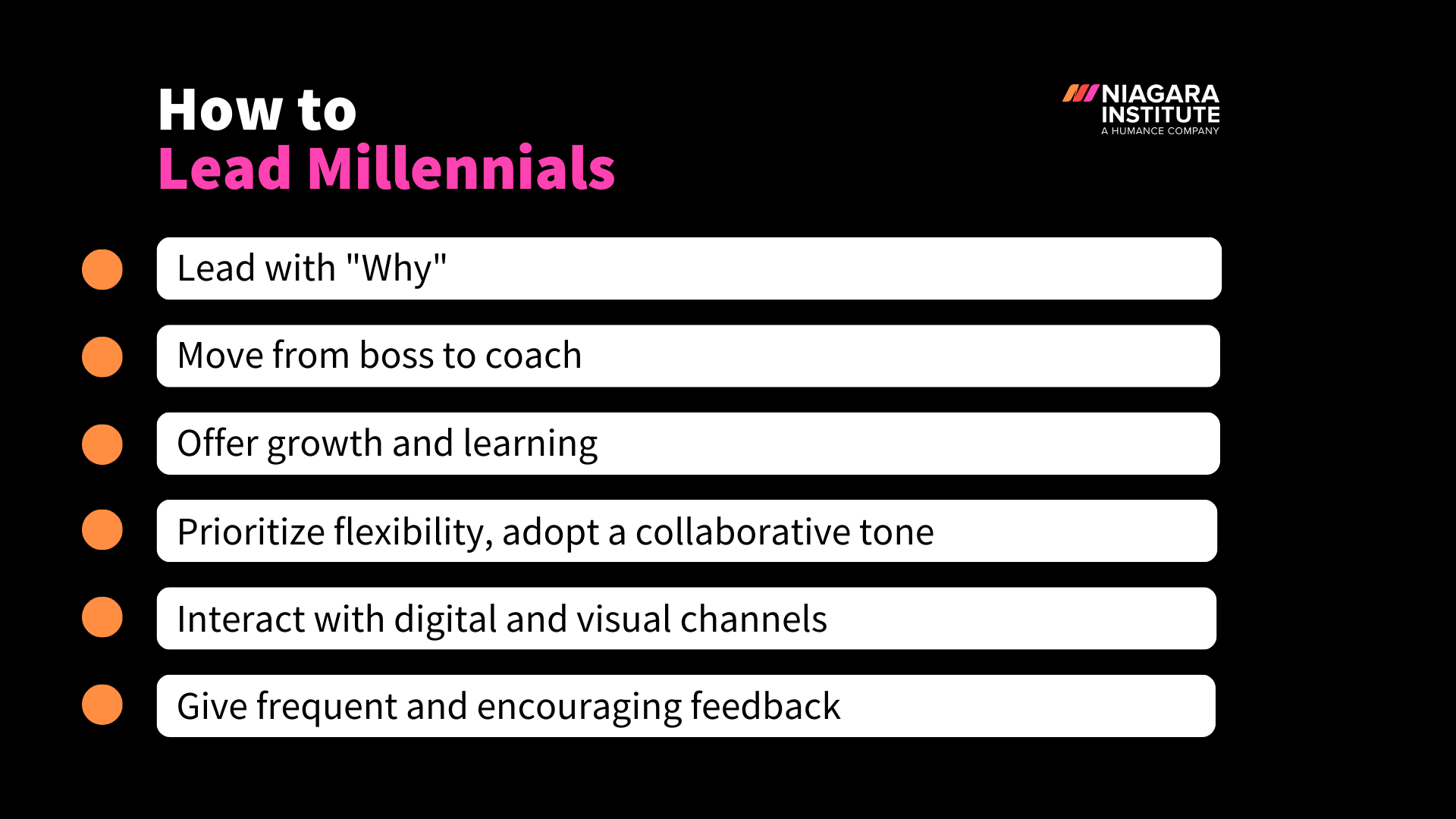
1. Lead with "Why"
For Millennials, a paycheck is not enough; they want their work to matter. They are drawn to companies that have a social mission or clear values. As a leader, you must show them how their daily tasks help the bigger goal. They are more likely to stay if they feel they are making a difference in the world.
Millennials are more motivated when they see how their individual contributions help achieve a meaningful goal. To motivate them, connect their performance directly to the company’s mission or a broader social impact.
2. Move from Boss to Coach
Millennials don’t like strict, top-down orders. They prefer a collaborative leadership style over rigid hierarchies. They respond well to ongoing coaching and two-way dialogue rather than top-down commands.
Instead of annual reviews, millennials want ongoing feedback. They see feedback as a tool to help them grow, not just a way to judge them. Think of yourself as a coach who helps them improve every week.
When you deliver feedback, highlight their strengths, clearly identifying areas for growth, and involve them in setting their own goals.
3. Offer Growth and Learning
This generation posses growth mindset and they are very focused on their careers. Millennials are highly motivated by the chance to learn new skills or take classes. If they feel stuck in a role with no future, they will look for other jobs. Give them "stretch" projects that challenge them to do more than their usual work.
4. Prioritize Flexibility
Millennials were the first to really fight for work-life balance. They often value flexible schedules or the ability to work from home over a higher salary. They don’t see work and life as two separate things but as parts that should fit together. If you can give them some control over when and where they work, you will see more effort from them.
5. Give Frequent and Encouraging Feedback
Replace annual reviews with regular, in-the-moment feedback. Millennials use feedback as a tool for personal and career development. To support their development, frame feedback as an opportunity for them to take on stretch assignments or learn new skills, as career progression is a top priority for them.
They prefer ongoing, in-the-moment feedback and frequent assessments to ensure they are on the right track.
6. Use Digital and Visual Channels When Communicating
While they are proficient with technology, they favor email, instant messaging (IMs), and texts. They often prefer self-directed digital learning and video content over traditional classroom settings.
Leading Gen Z: Authenticity, Transparency, and Wellbeing
Gen Z (born 1997–2012) is the newest group in the workforce. They are true digital natives who have always had the internet in their lives. As a manager, understanding Gen Z perspective as a manager starts with understanding that this generation is very practical and value transparency above all else.
As true digital natives, Gen Z expects authenticity, extreme transparency, and rapid response times.
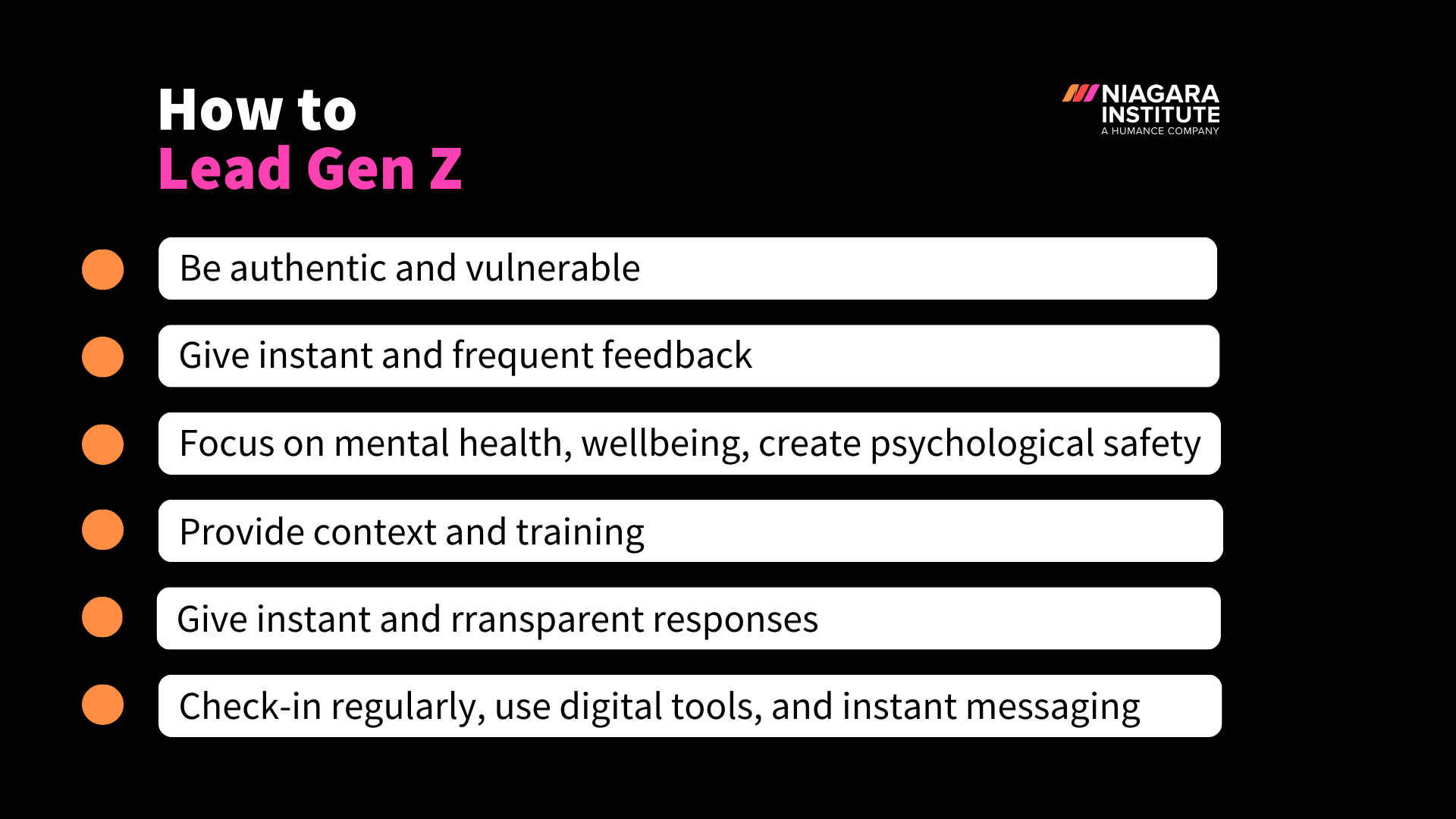
1. Be Authentic and Vulnerable
Gen Z can quickly tell if a leader is not being real. They are skeptical of corporate talk and prefer honesty. Don't be afraid to admit when you don't have all the answers. They respect leaders who are open about both successes and failures.
Gen Z has a high "authenticity radar" and values leaders who are honest, real, and willing to admit mistakes. They are often skeptical of corporate jargon.
2. Give Instant and Frequent Feedback
Since they grew up in the age of social media likes and comments, Gen Z expects fast responses. They don't want to wait for a meeting to know how they are doing. Short, daily or weekly check-ins are much better than one big meeting. They need to know they are on the right track in real-time.
Having grown up in an era of instant social media validation, Gen Z expects frequent and honest feedback. They can quickly detect when a leader is being disingenuous, so authenticity is crucial.
3. Provide Context and Training
Because many in Gen Z started their careers during the pandemic, they missed out on in-person learning. They may lack some of the "soft skills" that older workers take for granted, like networking or office politics. You need to provide more hands-on onboarding and training. Also, always explain the "why" behind a decision so they understand how they fit into the company.
4. Focus on Wellbeing and Inclusion
Gen Z needs to feel it is safe to ask questions or admit mistakes without fear of retribution. They want a workplace where it is safe to talk about stress or burnout. Leaders who support their wellbeing will find that Gen Z is very loyal in return. Responding to their failures with curiosity—asking "what can we learn?"—helps build the trust they need to thrive.
As a leader, your communication should reflect a commitment to diversity, equity, and mental health. Gen Z expect leaders to acknowledge them as whole people, not just workers.
To create a psychological safety, hold weekly 1-on-1 meetings. These meetings should go beyond task lists to focus on their growth, well-being, and how they feel about their role.
5. Digital-First and Instant Messaging
Gen Z prefer quick, informal communication through platforms like Slack, Teams, voice notes, even WhatsApp. Use visual elements like charts and infographics to deliver information efficiently.
Conclusion: Leading the Individual
When you blend the vast experience of Boomers with the purpose-driven heart of Millennials and the digital speed of Gen Z, your team can do amazing things.
Most effective leaders are flexible. They listen more and adjust their style to help each person succeed. By focusing on respect, growth, and transparency, you can create a culture where everyone feels they belong. If you treat your team members as individuals with unique strengths, the age gap will disappear, and the whole company will thrive.


 Gavin Brown



 Gavin Brown : Apr 22, 2025, 12:27:38 PM