We’re in the middle of a major shift—the Fourth Industrial Revolution. New technology is changing how we live and work at its full speed. AI and advanced digital tools are so powerful to reshape jobs across the world. Some studies suggest that close to 40% of roles could be affected by AI-driven change.
It’s normal to feel uneasy about this change.
But this story isn’t only about machines replacing people. It’s about how we - humans use these tools and how fast we can adapt. Automation may take care of repetitive tasks, but the real advantage will belong to people who bring what technology can’t: sound judgment, creativity, empathy, and clear communication.
It Isn’t Just "Soft Skills" Label Anymore
For years, workplaces have called communication, teamwork, and problem-solving “soft skills.” The name makes them sound optional or easy, especially compared to technical “hard skills.” But that label misses the point.
Soft skills are anything but simple. They take effort, self-awareness, and real practice to build. That’s why many experts now prefer terms like “human skills” or “hard and human skills.” They’re deeply tied to how we think, respond under pressure, and work with others. These traits are shaped by our habits, temperament, and values. In other words, they’re some of the most complex skills to develop.
Technical skills like coding or auditing can help you get hired. But human skills help you stay relevant, grow, and reach your long-term career goals.
Here are 10 critical human skills expected to be most in demand as we move toward 2030.
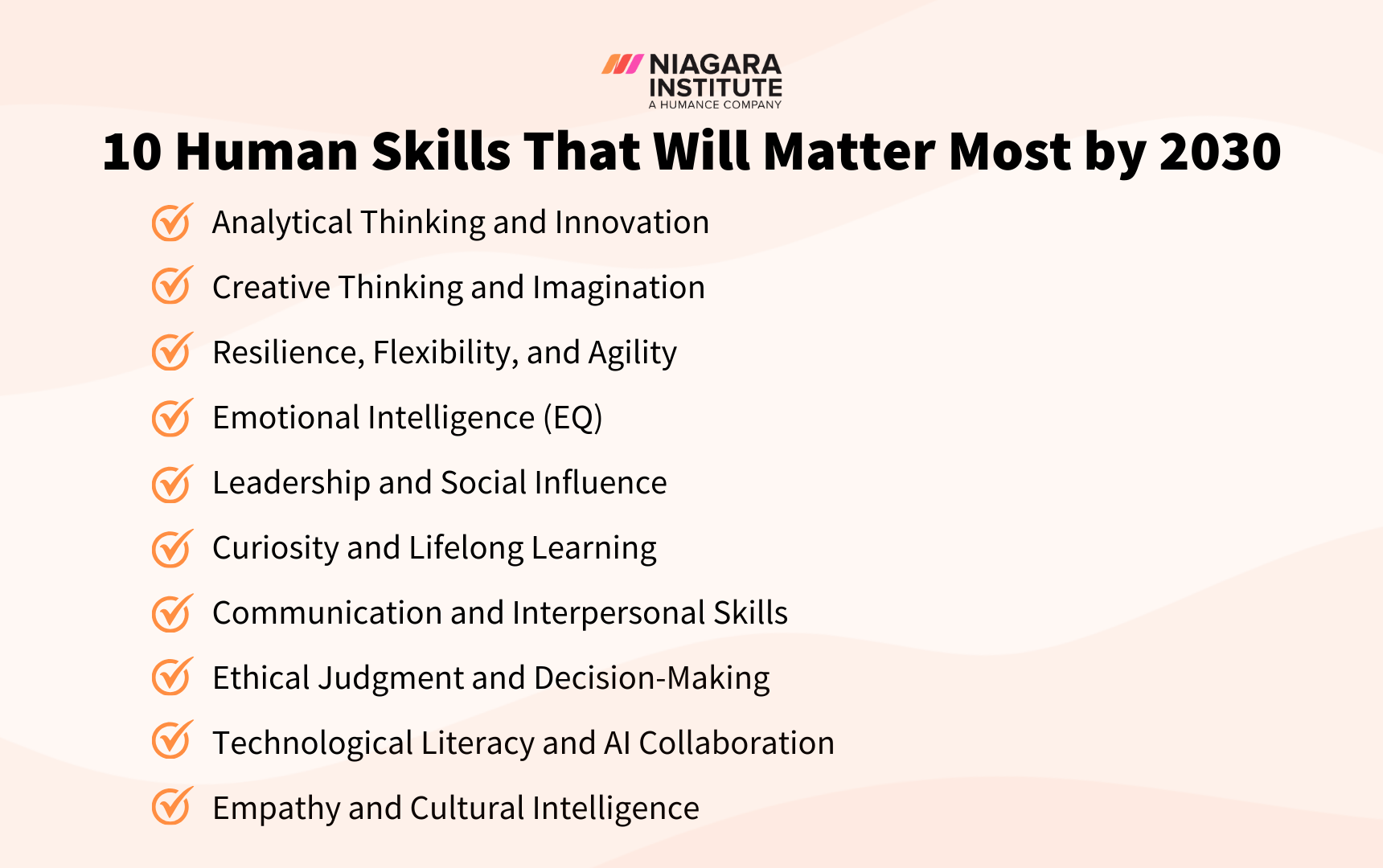
10 Human Skills That Will Matter Most by 2030
The following human skills reflect the human-centered strengths, the abilities that help people think clearly, work well with others, and make good decisions:
- Analytical Thinking and Innovation
- Creative Thinking and Imagination
- Resilience, Flexibility, and Agility
- Emotional Intelligence (EQ)
- Leadership and Social Influence
- Curiosity and Lifelong Learning
- Communication and Interpersonal Skills
- Ethical Judgment and Decision-Making
- Technological Literacy and AI Collaboration
- Empathy and Cultural Intelligence
1. Analytical Thinking and Innovation
As AI produces more data, humans must decide what truly matters. For this, analytical thinking might be the most in-demand skill today. It means using logic to solve problems and judge ideas clearly.
People with analytical thinking weigh options, question results, and stay open to better answers. This skill helps teams decide what work belongs to humans and what machines should handle.
2. Creative Thinking and Imagination
Creativity helps people imagine what does not yet exist. It starts with asking “What if?” before asking “How much?”
Machines follow rules well, but they cannot think in original ways. Humans bring ideas to life by connecting dots and seeing new paths. In the future, creativity will drive new products, new processes, and better ways of working.
3. Resilience, Flexibility, and Agility
Adaptability is one of the fastest-growing skills today. Rapid change, especially after the pandemic, made it essential. Resilience means recovering from setbacks and moving forward with purpose.
Flexible teams adjust quickly without losing focus. Instead of breaking under pressure, they adapt and grow. Since change will be constant by 2030, success will belong to those who see change as an opportunity, not a threat.
4. Emotional Intelligence (EQ)
Emotional intelligence is becoming a core leadership skill. It means understanding your own emotions and recognizing how others feel. High EQ includes empathy, self-control, and honesty. These traits build trust, especially in remote and hybrid teams. Machines cannot read tone, sense tension, or show real care. Leaders with strong EQ create healthier teams, stronger collaboration, and higher employee loyalty.
5. Leadership and Social Influence
Leadership is no longer about titles or authority. It is about influence and trust. Since 2023, this skill has grown sharply in importance. In the future, people will lead small teams and short projects often. Strong leaders help others feel safe to speak up and share ideas. This sense of psychological safety allows creativity and innovation to thrive.
6. Curiosity and Lifelong Learning
Skills now become outdated faster than ever. On average, a skill lasts only about six years. This makes intellectual curiosity a must-have trait. Lifelong learners stay relevant by asking questions and exploring new ideas. They are willing to learn, unlearn, and learn again. Employers value people who seek growth instead of comfort. A curious mindset helps professionals adapt as technology evolves.
7. Communication and Interpersonal Skills
Communication skills are the foundation of strong relationships. Skilled communicators share ideas clearly and listen with care. They connect across cultures, roles, and locations. In global and hybrid teams, connection matters more than just sending messages. Active listening helps people feel valued and understood. This leads to better teamwork, stronger trust, and happier customers.
8. Ethical Judgment and Decision-Making
AI can analyze data, but humans make the final call. Ethical judgment helps people see the bigger picture. It considers fairness, privacy, and long-term impact. Humans must decide how technology affects people and society. This skill ensures that decisions align with shared values. Responsible choices build trust and protect both employees and customers.
9. Technological Literacy and AI Collaboration
Everyone will need basic tech skills in the future. But success is not about competing with AI. It is about working with it. AI literacy means knowing how tools work and how to use them well. This includes clear prompting and smart use of digital systems. People who blend tech knowledge with human insight will lead in AI-driven workplaces.
10. Empathy and Cultural Intelligence
Empathy allows people to understand others deeply. It builds connection, trust, and care. As teams grow more diverse, cultural intelligence becomes essential. This skill helps people work well across cultures and backgrounds. Inclusive teams create better products and services. In customer-facing roles, empathy creates the human touch that builds lasting loyalty.
The Future is "T-Shaped"
In the coming years, the most valuable professionals will be "T-shaped" individuals. This means having deep technical expertise in one specific area while also possessing a broad, strong set of human skills.
By focusing on these predicted skills, you are not just preparing for a job; you are preparing to thrive in a more dynamic and innovation-driven world. AI may accelerate our work, but humans will always determine the direction.

 Gavin Brown


 Gavin Brown : May 30, 2025, 5:48:28 AM
.png)

.png)