You've had a rough week. A project just fell apart, your inbox is a disaster, and you're running on three hours of sleep.
So you turn to your manager, hoping for a real conversation. And you get:
"Just stay positive! Everything happens for a reason."
You smile, nod, and go back to your desk feeling somehow… worse.
That's toxic positivity. And it's more common at work than most of us want to admit.
What Even Is Toxic Positivity?
Toxic positivity is about being forced to be cheerful even when things genuinely aren't okay.
It's the corporate cousin of "toughen up." It looks friendly on the surface, but underneath, it's telling people: your real feelings aren't welcome here.
Here's a simple way to tell the difference:
Healthy optimism sounds like: "This is hard. But I think we can get through it together."
Toxic positivity sounds like: "No negative energy! Focus on the good stuff."
One acknowledges reality. The other runs from it.
Most toxic positivity comes from a good place. Nobody wakes up thinking "I'm going to dismiss someone's pain today." It usually starts with a genuine desire to help but ends up doing the opposite.
In some workplaces, this culture starts at the top. A toxic boss may demand constant positivity and treat honest feedback as negativity. When employees raise real concerns, the toxic boss tells them to “stay positive” or “stop being negative.”Over time, people stop speaking up and keep problems to themselves.
Signs Your Workplace Has a Toxic Positivity Problem
It is easy to miss toxic positivity in the workplace, especially if you're in it every day. But once you know what to look for, you'll start noticing it everywhere.
Watch out for these patterns:
- Concerns get brushed off with "It could be worse" or "Look on the bright side"
- Team members who seem unhappy are quietly pushed to the margins
- Bad news gets buried under spin whereas big problems framed as "exciting opportunities"
- Anyone who raises risks in a meeting gets labeled a pessimist
- Employees smile at all-hands meetings, then vent in the parking lot
Once trust between leaders and employees is broken that way, it is very hard to rebuild.
Why It Actually Makes Things Worse
Forcing positivity doesn't get rid of negative feelings. It just pushes them underground where they quietly cause far more damage.
For individuals, suppressing emotions is exhausting. It creates a constant internal split between how you're supposed to feel and how you actually feel. Over time, that tension turns into burnout, anxiety, and physical symptoms like fatigue and disrupted sleep. Research consistently shows that people who can process difficult emotions end up in a better place than those who bury them.
For teams, the damage shows up in performance. If someone does poor work but only hears "great job, keep going," they have no information to improve and they'll feel blindsided when results eventually catch up with them. Honest feedback, even when uncomfortable, is what actually helps people grow.
For organizations, the numbers are telling. SHRM's research found that employees in toxic workplace cultures are nearly 58% more likely to be actively job hunting. High turnover is expensive. And when people are afraid to speak up about risks or mistakes, innovation dies. No one suggests the risky new idea if they're worried about being labeled a downer.
How Different People Experience It (And Spread It)
Here's something worth knowing: not everyone contributes to toxic positivity the same way, and not everyone is equally vulnerable to it.
People who are naturally results-driven tend to push through emotions to get things done. This in turn, can come across as dismissive to teammates who need to process first. Their unspoken message is often "feelings are slowing us down."
People who are relationship-focused might avoid difficult conversations entirely because they genuinely hate conflict. They reach for reassuring platitudes not to silence others, but because they don't know what else to say.
Meanwhile, the quiet, agreeable people on your team, the ones who never cause a fuss are often suffering the most in silence. They're absorbing everyone else's positivity mandate while their own needs go unmet.
Understanding why people default to toxic positivity can make it easier to address without shaming anyone in the process.
What to Say Instead of Toxic Positivity in the Workplace
This is where things get practical.
Changing a workplace culture feels like a massive undertaking. But it often starts with something small: choosing different words.
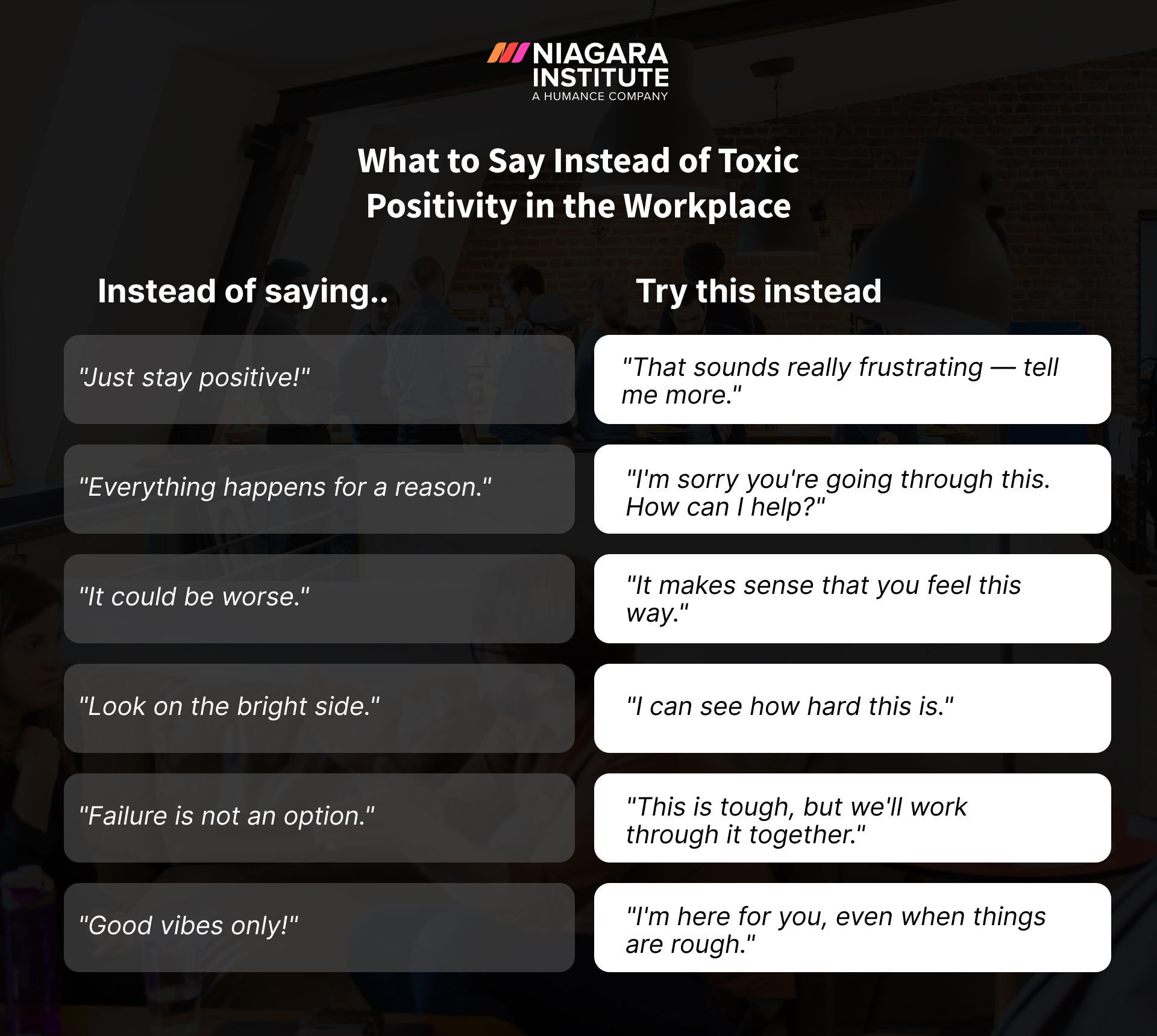
None of these are complicated. But they signal something important: your real experience matters here.
How Leaders Can Prevent Toxic Positivity in the Workplace
If you manage people, you have more influence over this than you might think.
1. Be honest about hard things
When things go wrong, say so. You don't need to catastrophize. But sugarcoating reality destroys your credibility faster than any bad news ever could. Realistic optimism — "this is a real challenge, and here's how we're going to tackle it" — is far more motivating than false cheerfulness.
2. Listen before you fix
When someone comes to you with a problem, resist the urge to jump straight into solutions. Most people just need to feel heard first. A simple "that sounds really difficult" goes further than ten bullet points of advice.
3. Ask better questions
"How can I support you?" is a different conversation than "here's what you should do." It puts the other person in the driver's seat and signals that you're there to help, not to manage their emotions for them.
4. Model vulnerability
If you never admit to your own struggles, your team won't either. You don't need to overshare. But when you say "this quarter was hard for me too, here's how I dealt with it," you make it safe for others to be honest.
5. Make space in meetings for real feedback
If every retrospective ends with a round of applause and no real discussion, you're not actually learning anything. Build in time for honest reflection — and make it clear that raising concerns is a sign of engagement, not negativity.
How Employees Can Deal with Toxic Positivity at Work
You don't need to be in charge to push back on toxic positivity.
1. Validate your own feelings first
Stop telling yourself you shouldn't feel stressed or sad or frustrated. Those feelings exist for a reason. Accepting those feelings rather than fighting them is actually the faster path to getting through them.
2. Name what you need
If a colleague responds to your problem with a platitude, it's okay to redirect: "I know you're trying to help — I really appreciate that. But right now I think I just need to vent for a minute, if that's okay." Most people respond well to this. They were just reaching for the wrong tool.
3. Know your limits
You're not obligated to perform happiness. And if your workplace has a culture that genuinely punishes honesty, it might be worth looking at whether it's the right environment for you long-term.
The Bottom Line
The best workplaces aren't the happiest ones but the most honest ones.
Real psychological safety — the kind that actually drives performance and retention — comes from knowing that you can say "this is hard" without being quietly labeled as a problem. It comes from leaders who tell the truth even when it's uncomfortable. From teammates who listen before they advise.
When people feel genuinely seen, they don't just feel better. They work harder, stay longer, and trust more. The irony of chasing good vibes at all costs is that you end up with the opposite: a team that's smiling on the outside and quietly disengaging on the inside.
Drop the mask. Have the real conversation. The authentic good vibes will follow.



 Gavin Brown



 Michelle Bennett : Oct 1, 2023, 5:00:00 AM

.png)