Have you ever wondered why some people seem to just naturally know how to lead and inspire others?
It turns out that there are scientific theories that can help explain why this is, and how leaders can learn to follow their example.
There are many different leadership theories out there that help explain why a leader is successful.
By understanding them, you can learn how to improve your leadership skills and create a positive, inspiring work environment for your team.
Let's dive in and explore the key theories that have shaped our understanding of leadership over the years.
Four Major Leadership Theories
There are 4 major leadership theories. Each leadership theory offers a different perspective on how effective leadership works:
- Trait Theory
- Behavioral Theory
- Situational Leadership Theory
- Transformational Leadership Theory
1. Trait Theory
This theory says that leaders are born, not made. It focuses on personal qualities that make someone a good leader. These traits include being honest, confident, and smart. If you have the right traits, you are more likely to be a strong leader.
Trait Theory evolved from the "Great Man" theory. It focuses on specific characteristics and personality traits associated with effective leaders. According to McCall and Lombardo, four core traits set leaders apart: emotional stability, honesty, humility, and strong mental and social abilities. While this theory provides valuable insights, it doesn’t account for the growth of leadership skills over time or transferring skills across different scenarios.
The "Great Man" Theory
The notion of the “Great Man” theory suggests that leaders are born, not made, with inherent traits that destined them for leadership roles. Under this framework, leaders are often seen as exceptional figures who rise to prominence in times of need.
The “great man” theory suggests that some people are born with courage, confidence, and will, while trait theory identifies specific traits associated with leaders, such as intelligence, ambition, and energy.
However, this theory falls short as it fails to consider the potential for leadership development and the influence of situational factors.
2. Behavioral Theory
This theory looks at what leaders do, not who they are. It says that anyone can learn to be a leader by acting the right way. Some leaders focus on getting tasks done. Others focus on building strong teams. The best leaders balance both.
Behavioral theory emerged when researchers began studying the specific behaviors that made leaders effective. It suggests that leadership can be learned and developed through the adoption of appropriate behaviors and actions.
The most influential behavioral leadership models include the Theory X & Y leadership model.
Theory X & Y
Douglas McGregor's Theory X & Y explores two different views of human motivation in the workplace. Theory X assumes that people inherently dislike work and need constant supervision, while Theory Y believes that people are inherently self-motivated to complete their work and thrive under less stringent management. This theory helped shift the focus from managers’ perceptions of leadership to how people need to be led.
3. Situational Leadership Theory
This theory says that the best leadership style depends on the situation. A good leader will change their style based on who they are leading.
The simplistic situational leadership theory states that different situations call for different leadership styles. This idea counters the notion of a universal leadership style, focusing on choosing the right style for the specific context. It factors in the confidence and competence of subordinates and the intentions and competence of the leader.
The original Situational Leadership Model, developed by Hersey and Blanchard, identifies four leadership styles that correspond to the development level of followers:
- Directing (high directive, low supportive)
- Coaching (high directive, high supportive)
- Supporting (low directive, high supportive)
- Delegating (low directive, low supportive)
Contingency Leadership Theory
Like situational leadership, contingency theory suggests that leadership style should change with the context. It emphasizes the fit between the leader's style and the demands of the situation. This theory considers the leader’s personality and the specific circumstances to create an optimal match for effective leadership.
4. Transformational Leadership Theory
This theory is about leaders who inspire and motivate others. They help people see a bigger goal and encourage them to grow.
The transformational leadership theory is a more emotionally intelligent approach aimed at motivating and inspiring teams. These leaders lead by example and foster a supportive environment, inspiring employees to follow suit. Characteristics include humility, sympathy, honesty, ambition, and self-awareness. This theory focuses on moving beyond personal goals for the greater good of the team.
Transformational leadership theory contrasts with the transactional leadership theory.
Transactional leadership theory
Grounded in reward and punishment, transactional leadership theory sees the relationship between leader and team member as a series of exchanges to foster productivity. Though effective in revealing the dynamics of power and responsibility, it should be balanced with the consideration of personal growth and long-term engagement.
Additional Leadership Theories
Beyond the four core leadership theories, several other important theoretical frameworks have contributed to our understanding of leadership:
Servant Leadership Theory
Serving is at the heart of servant leadership. Proposed by Robert Greenleaf, servant leadership theory emphasizes the leader's role as a steward of the resources provided by the organization. Key characteristics include empathy, self-awareness, and strong communication skills. This approach encourages leaders to prioritize their team's needs before considering their own.
Theory U
Introduced by Otto Scharmer, Theory U explores the journey to the bottom of the U by letting go of past paradigms and meeting the future with an open mind. The thinking process involves three stages: Sensing, Presencing, and Realising. These stages help teams gain initial momentum, prepare for organizational change, and crystallize a shared team vision for the future, fostering a culture of adaptability and innovation in the work environment.
Adaptive Leadership Styles
Adaptive leadership styles focus on helping individuals and organizations adapt to change. This approach views leadership as a resource for constructing new ways of seeing and doing things. It emphasizes resilience in the face of challenges and harnesses collective intelligence to overcome obstacles.
Implicit Leadership Theory
Implicit Leadership Theory explains that people have preconceived notions of what a leader 'should' look like and how they 'should' act. This means that the characteristics that leaders display have less to do with the success of the leader than the acceptance and conviction by the followers that the individual should be assigned or accepted as the leader. This fact challenges hierarchical models that emphasize some individuals should be the leader regardless of the circumstance.
Authentic Leadership
Authentic Leadership requires leaders to be true to their own values and convictions, being genuine, transparent, and ethical. It means leaders build trust and relationships with their employees by showing authenticity and consistency in their actions, emphasizing self-awareness and authentic relationships.
Relational Leadership Theory
Relational Leadership Theory [RLT] emphases the relationship between leaders and their followers, proposing leadership is a process constructed through social and relational interactions. It suggests leadership is a collective process, not limited to a single leader, and that effective leadership in organizations depends on quality relationships.
Leader-Member Exchange Theory
Leader-Member Exchange Theory suggests the relationship between a leader and a follower is the primary focus of leadership effectiveness. It proposes that leaders use different relationship styles with their followers, which leads to different outcomes and emphasizes building high-quality, trust-based relationships.
How did Leadership Theories Evolve?
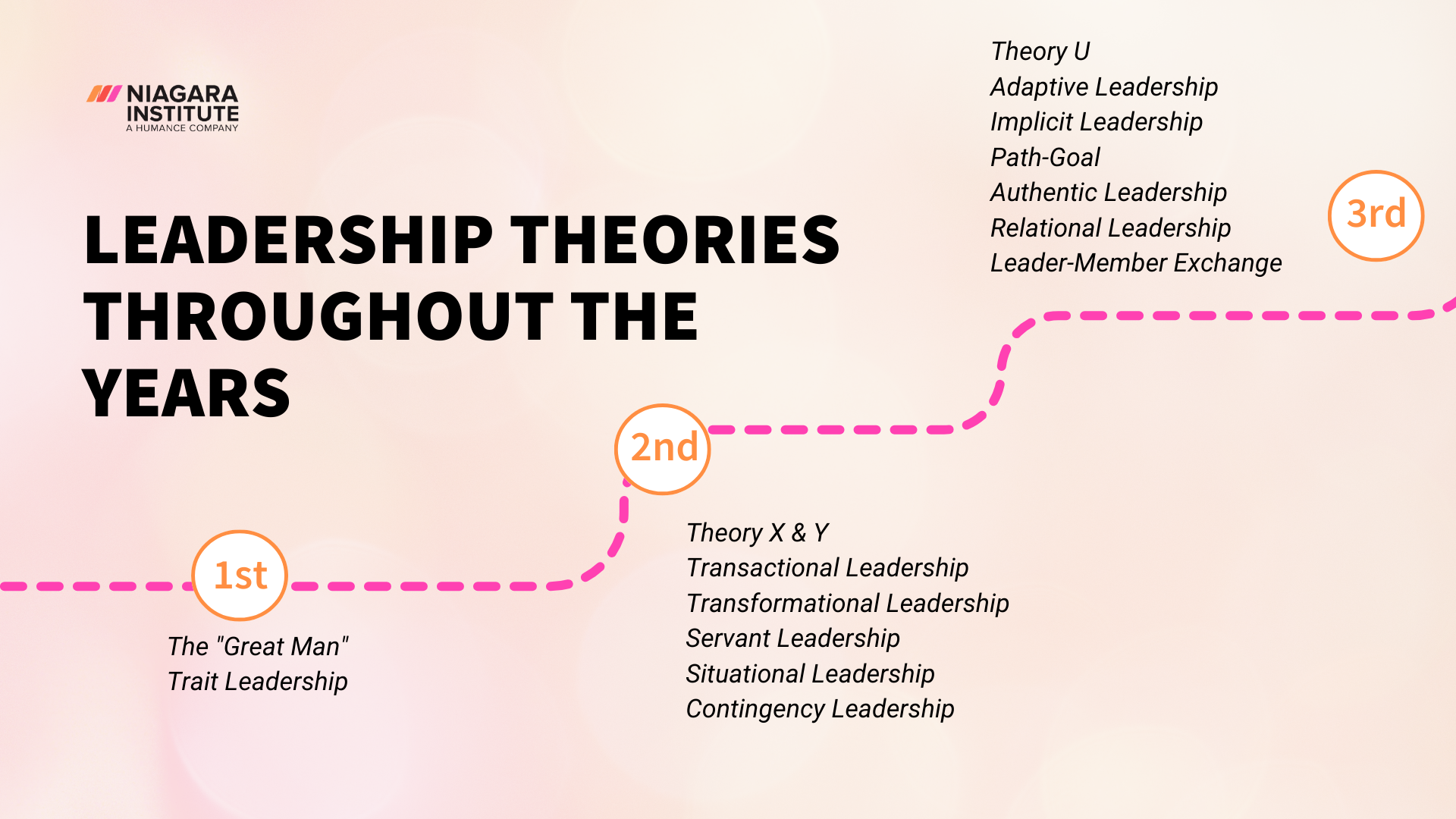
Leadership theories have been categorized into what are known as “generations,” which describe how these theories have changed over time.
- First Generation theories are old-fashioned ideas about leaders being born with certain skills or traits. People believed that leaders were born, not made. These ideas were popular over 100 years ago.
- Second Generation theories suggest that leadership is learned based on the situation. By learning how to motivate team members in different situations and using feedback to improve leadership skills, leaders can adapt their style to fit the needs of their followers.
- Third Generation theories focus on the relationship between a leader and their followers. Leaders who build professional relationships with their teams are able to influence them more effectively.
Leadership Theories vs Leadership Styles
Though leadership styles and leadership theories are closely related, they are not the same.
Leadership theories are ideas that help us understand why and how people become leaders and what makes them effective. They offer insights into the traits, actions, and circumstances that make leadership work well.
Leadership styles, on the other hand, are the actual ways leaders manage and inspire their teams. These styles come from leadership theories but are more about how leaders act in real life.
Many leadership styles are based on leadership theories.

Conclusion: Finding Your Leadership Path
Understanding the four core leadership theories—Trait, Behavioral, Situational, and Transformational—provides a comprehensive foundation for developing your leadership approach. Whether you're a natural leader (Trait Theory), learning how to act (Behavioral Theory), adjusting to new situations (Contingency Theory), making fair trades (Transactional Theory), or inspiring big dreams (Transformational Theory), there's a leadership style for you.
By understanding these leadership theories, you can craft a leadership style that is thoughtful, inclusive, and responsive. Remember that effective leadership is not about following a fixed formula but rather adapting to the needs of the people and situations around you.



 Gavin Brown



 Gavin Brown : Jun 28, 2024, 6:07:22 AM
%20(1).png)